Land, memory and community
The history of Secret Lake
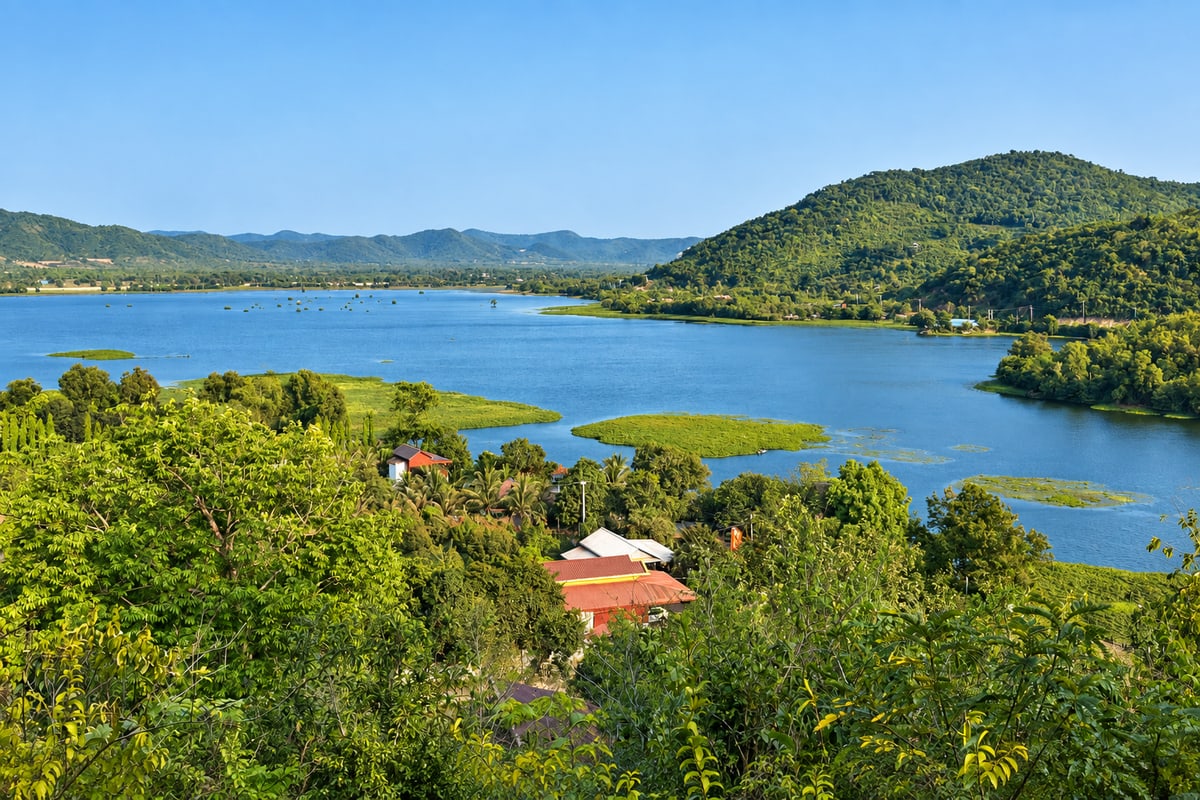
From a farming valley to a reservoir of memory: the story of Pro Toak Krola, known to many visitors as Secret Lake.
Before the Lake: Trapaing Kok Village
According to local accounts recorded by Secret Lake House, this valley was once home to Trapaing Kok Village, a farming community where families grew pepper, vegetables, and other crops. The same accounts describe families leaving their homes during the civil war and bombing of the early 1970s. These village-level details are preserved here as oral history, rather than independently verified archival findings. [1]
The Khmer Rouge Period, 1975–1979
Secret Lake is an artificial reservoir commonly described as having been built during the Khmer Rouge period for agricultural irrigation. Local accounts describe the displacement of villagers and the construction of earthen embankments through forced labour. [1, 2] This history sits within the regime's wider system of forced labour and agricultural collectivisation, documented by the United States Holocaust Memorial Museum. Remembering that suffering is an important part of understanding the landscape. [3]
A Workshop Beneath the Pool
Secret Lake House's account reports that old building foundations were uncovered while its infinity pool was being constructed. Local residents identified the site as a former family ironworking workshop that made and repaired tools for nearby farms. They recalled its later use during the Khmer Rouge period and its destruction after 1979. This account is based on the owners' report and local recollections; it has not been independently established through an archaeological investigation. [1]
Remembering the 1994 Tragedy
Conflict continued in parts of Cambodia long after the Khmer Rouge lost power in 1979. On 26 July 1994, a passenger train travelling from Phnom Penh towards Sihanoukville was attacked east of Kampot. Among those abducted were Australian David Wilson, Briton Mark Slater, and Frenchman Jean-Michel Braquet, who were subsequently murdered. The Australian Parliament's chronology records the attack and the later confirmation of their deaths. This was a tragedy in the wider Kampot region, not an event documented as occurring at Secret Lake itself. [4]
How the Name Became Familiar
Local stories recorded in the history document describe foreign travellers following an old oxcart trail and encountering the lake beyond the vegetation. In this telling, the name “Secret Lake” spread among visitors as travel to the countryside became easier in the years after the conflict. The exact origin and date of the English nickname remain unverified; the reservoir was already known to local communities as Brateak Krola. [1]
A Place of Peace and Remembrance
Today, visitors come for lake views, nearby farmland, and time in the countryside. At Secret Lake House, we believe that enjoying this setting also means respecting the memories of the people who lived and worked here. Its story is not only one of scenery, but of community, hardship, and resilience. [1]
References & Source Notes
- Secret Lake House. Secret Lake History, undated, English version, pp. 5–7. Owner-provided account drawing on local oral history. Source for the village, workshop, naming story, and local reflections; not independent verification.
- Sokchea Kampot Hotel: The Secret Lake (Brateak Krola Lake). Local tourism account of the reservoir's origin; not an archival history.
- United States Holocaust Memorial Museum: Forced Labor and Collectivization. National historical context, not evidence for the specific workshop or village accounts.
- Parliament of Australia: Appendix 4, chronology concerning David Wilson and the 1994 hostage case.
Online references checked on 23 October 2026. Adapted from the English version of the history supplied by Secret Lake House.